
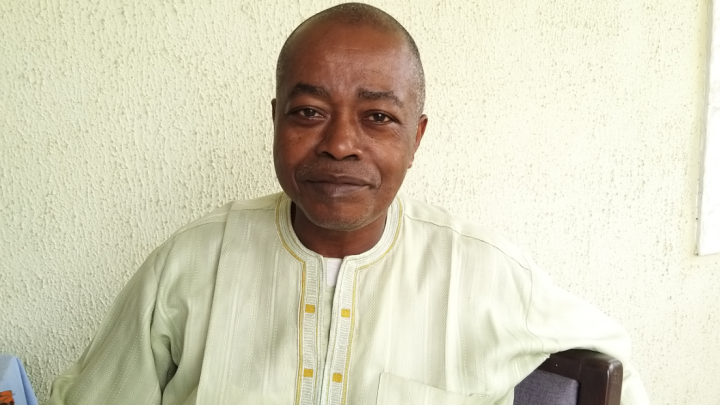
By Adiaha Udosen
Former Aviation Development Company (ADC) boss and veteran pilot, Captain Augustin Okon, has said Nigeria can still reclaim its position as Africa’s leading aviation hub if the country commits to safety-driven reforms, institutional discipline and long-term investment in people and infrastructure.
Okon made the statement in late January during an aviation stakeholders’ session held at the conference room of the Nigerian Civil Aviation Authority (NCAA) in Lagos, where regulators, airline operators and aviation professionals gathered to review the state of Nigeria’s aviation industry.
Speaking about Nigeria’s aviation history, Okon recalled a period when Nigerian pilots and engineers operated intercontinental flights and effected major aircraft maintenance locally. He said Nigerian professionals once flew Boeing 707s, 747s and DC-10s on long-haul routes to Europe and North America, and performed full C-check maintenance on Boeing 737 aircraft in Lagos.
“Yet today,” Okon said, “Nigeria has no national carrier and no meaningful in-country maintenance capacity.”
You can also read – Nduese Essien, 82, Bears the Burden and Grace of Standing Alone
According to him, Nigeria’s aviation decline was not caused by a shortage of skilled manpower but by policy inconsistency, weak institutions and the failure to sustain long-term aviation strategies.
He noted that Nigeria’s population of more than 220 million people, strategic geographic location and growing domestic air travel market still place the country in a strong position to lead aviation development in West and Central Africa.
Okon said any credible aviation revival must be anchored on safety, describing it as a culture that should define the entire aviation ecosystem. He called for a technically strong and independent NCAA that operates free from political interference and meets or exceeds International Civil Aviation Organisation (ICAO) standards.
He added that modernising Nigeria’s airspace is essential to improving operational efficiency and safety, noting that enhanced surveillance systems, modern communication and navigation infrastructure and digital air-traffic management would significantly strengthen the sector.
On aircraft maintenance, Okon said Nigeria must urgently reduce its reliance on foreign maintenance facilities.
He identified Uyo, Akwa Ibom State, as a viable foundation for developing a world-class maintenance, repair and overhaul (MRO) centre, supported by additional facilities in Lagos and Abuja. He said expanding local maintenance capacity would save foreign exchange, improve aircraft availability and deepen the technical skills of Nigerian aviation engineers.
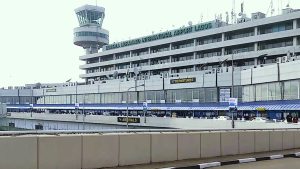
Murtala Mohammed International Airport, Lagos
Okon also emphasised the importance of human capital development, describing the Nigerian College of Aviation Technology (NCAT), Zaria, as central to Nigeria’s aviation future. He said upgrading NCAT to global standards would allow most pilot and cabin crew training for aircraft operating in Nigeria to be conducted locally under ICAO-approved programmes.
You can also read – What Governor Umo Eno Should Not Hear
He noted that sustained investment in training infrastructure and international partnerships would position Nigeria as a regional aviation training hub and a source of skilled professionals for other African countries.
Addressing the long-standing absence of a national carrier, Okon said Nigeria needs a more resilient model that avoids the pitfalls of full government ownership and the vulnerability of isolated private operators.
He said a structured framework that protects international traffic rights and long-haul operations while allowing domestic airlines to retain operational independence would strengthen the sector and preserve institutional continuity.
According to him, consistent implementation of aviation reforms could significantly expand Nigeria’s aviation workforce over the next decade and boost contributions to gross domestic product, employment and foreign-exchange earnings.
“Aviation is not built by chance,” Okon said. “It is built by vision, strong institutions and skilled people. If Nigeria gets safety, training and maintenance right, the country can move from recovery to leadership in African aviation.”