
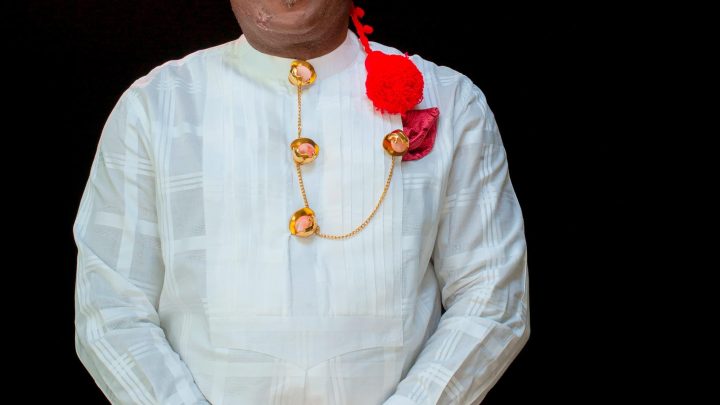
By Ibanga Isine
The story of Victor Antai is a silent rebuke to turncoat politicians and professional loyalty traders. It reminds us that character should outlive office and appointment.
In a political ecosystem where loyalty is frequently traded for appointments, Victor Antai, Executive Director, Projects of the Niger Delta Development Commission (NDDC), stands apart. Operating under a system where conscience is seen as a weakness, he chose to keep his. Victor’s journey, from his early days outside politics to his formative years in public service, has never been about power and position. It has always been about character. It is about gratitude. And it is about having the courage to stand firm in a sociopolitical ecosystem that rarely accepts such choices.
On the surface, Victor can come across as snobby, unserious, withdrawn, and even casual. But when you scratch that surface, you meet a fighter, a strategist, an orator, and a man who never forgets his past and those who shaped his journey.
The truth is that Victor has done so much for his community, the Oro Nation, Akwa Ibom State, and Nigeria, more than most of his contemporaries. Sadly, only a fraction of these efforts ever make news, and when they do, they are often buried in low-budget blog posts and momentary social media mentions.
Unlike today, where many young people finish school and immediately start following politicians and dishing heavy helpings of insults at perceived enemies and opponents in exchange for relevance, Victor took a very different path. He did not chase politicians in Akwa Ibom or Abuja. He did not insult anyone to attract patronage.
After graduating from the University of Port Harcourt, Victor moved to Lagos. Like many determined young Nigerians, he hustled, doing supplies and contracts, to find his feet. After landing a few major jobs, he reportedly returned to Port Harcourt and started a transport business. He is said to have also lived in Abuja, where he ran cleaning services for individuals and corporate organisations. I can not say which one came first.
What is, however, true is that his entry into politics was deliberate, not accidental.
When Victor returned to Oron, he made two moves that caught everyone’s attention. He replaced damaged electricity poles from Eyokponung in Udung Uko to Ebuhu in Mbo Local Government Area, a stretch of about 10 kilometres and restored power to communities that had lived in darkness for years. That single act changed how people saw him.
You can also read: What Governor Umo Eno Should Not Hear
Victor’s second bold step was to place a billboard near the Oron Local Government Secretariat junction. It carried a simple but powerful message: “Oro Ekufre Mio” – Oro, do not forget me. His life-sized photo on the billboard amplified the message more, leaving a strong visual impression on everyone who passed by. It was bold. It was visual. And it was the first of its kind in that part of Akwa Ibom.
As he consulted widely, Victor realised the odds were stacked against him. Instead of walking away bitter or disillusioned, he chose the path of humility. He went to serve Chief Enyong Asuquo, a respected political leader from his area.
After Chief Asuquo’s death, and with the support of the then PDP Chairman in the state, Chief Out Ita-Toyo (Total Chair), Victor ran for Chairman of Mbo Local Government Area. He won and served two terms. And quietly, steadily, he began to etch his name in state and national politics.
In 2015, Governor Udom Emmanuel appointed him Commissioner for Local Government and Chieftaincy Affairs. But it was his later redeployment to the Ministry of Culture and Tourism that truly revealed the depth of his creative imagination.
Victor led what could be described as a sociocultural renaissance in Akwa Ibom State. He initiated the Orange September to celebrate the creation of the state. The Christmas Village followed and has become a December ritual, attracting millions to Uyo to experience the state’s rich culture, cuisine, and hospitality. Then came Ukapa Isua, a grand end-of-year celebration ushering in the new year.
You can also read – Nduese Essien, 82, Bears the Burden and Grace of Standing Alone
Courage Mbon, one of Akwa Ibom’s finest compères and red-carpet hosts, is one of the young people who worked closely with Victor during this period. Even with their closeness, Courage still describes Victor as an enigma. Their bond is beautifully symbolic: Victor and Courage. To be a victor, you must first have courage.

Ironically, their paths crossed on a sour note in August 2016, after Victor unveiled a state’s tourism logo that sparked controversy. Courage was one of the most vocal critics of the logo. At the height of the backlash, Courage received a call through Ms Aniebiet Francis; the commissioner wanted to see him.
At that meeting, Victor looked him straight in the eyes and said: “You seem to know a lot about tourism. I don’t want you to be a critic anymore. I want you on my team. Let us partner and make Akwa Ibom the envy of other states.”
That moment defined Victor’s leadership style. He assembled a team of gifted creatives who went on to conceive and deliver some of the most successful tourism experiences in the state, including Oro Uso, Christmas Village, Ukapa Isua, and Orange September.
Reflecting on that era, Courage said: “By the time he resigned in 2018, Chief Victor Antai had become the most successful tourism commissioner in a state where tourism was previously treated as an afterthought and the ministry seen as a dumping ground for expired politicians.”
Many describe Victor as unusual and spontaneous. Others say he is fearless, a challenger of the status quo, a stubborn non-conformist. But his down-to-earth nature has endeared him to many while irritating political elites who prefer to keep away from the grassroots.
Cyril Bassey, a young man from Oron, describes him as “affable, smart, and erudite.” He says Victor is a natural crowd-puller who has impacted young people in Oro Nation more than many politicians before him. Cyril attributes his popularity among youths and progressives nationwide not only to his generosity but also to his ability to connect with people.
A few weeks ago, Victor revealed another side of himself in a raw, emotional gratitude at a reception in honour of Senate President Godswill Akpabio at Ikot Ekpene Stadium.
You can also read: CNPP Demands Adoption of Reps Version of Electoral Act Amendment Bill 2026
Describing Akpabio as the man who gave him everything, Victor said, “You made me a two-term local government chairman. After that, you nominated me commissioner. That was when Orange September was born. Christmas Village was born. Ukapa Isua was born.”
He continued by recounting the many appointments, disappointments, and the long road to trust they have walked over the years, telling Akpabio, “Sir, I don’t believe in loyalty. Loyalty can be transferred. I believe in conscience, because conscience stays with you.”
And then came his closing line with sublime articulateness: “Sir, I have nothing to give you except thank you. Go and sleep. I will retire with you. You have a son, a brother, and a friend in me. I will never betray you.”
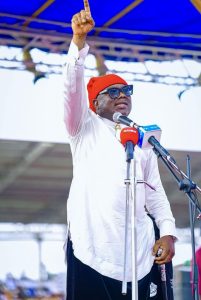
Chief Victor Antai, Executive Director -Projects, NDDC
In that important moment, Victor Antai did not just present himself as a typical Nigerian politician. He is a grateful man, grounded, reflective, and deeply human. As he yielded the mic, something unusual happened in the stadium – the crowd not only clapped. The crowd erupted.
Applause rolled through the stadium in waves. People stood. Some shouted his name. Others nodded in silent agreement. Almost instantly, social media caught fire. Clips of his speech circulated widely, with many celebrating him for choosing conscience over transactional loyalty—a currency that has become the bane of Nigeria’s politics. But no major media platform captured and played it, and no newspaper reported that solemn moment for what it was worth.
Ironically, many of those who praised Victor that day had short memories. Some of them had recently mocked and cursed another young man who chose conscience over loyalty in his relationship with a benefactor. In Nigerian politics, people like Victor are often treated as rebellious. Being independent as he is mistaken for ingratitude.
But in that stadium, in that moment, mmo ema efre (they had forgotten). Forgotten the years, the taunts, and the laughter they dished him. The irony was impossible to overlook. Many of those praising Victor were the same individuals who humiliated him in 2018, when he resigned as Commissioner of Culture and Tourism to join his benefactor, Godswill Akpabio, after the then-Senate Minority Leader defected from PDP to APC.
That decision almost cost Victor everything. At the time, he was on the brink of being sacked. Resignation was the safer, more honourable route, but also the loneliest.
When media aides and caustic politicians heckled him, he could have fought back. He could have traded insults. He could have played victim. But he did none of that. Victor did not insult Governor Udom Emmanuel after leaving the PDP. He did not abuse the government that gave him a platform and visibility. He did not curse those who laughed at and scorned him. He chose silence. And it was a dignified silence.
While professional loyalty traders, those who wake up every election season to swear fresh oaths of allegiance in exchange for appointments, took turns mocking him, Victor stayed focused. He took in the insults. He watched people who had never stood for anything trade yesterday’s convictions for today’s benefits. In that stadium, most of those present were guilty.
In that stadium too, that day, history had done what it always does: exposed everyone. Almost all of Governor Emmanuel’s fair-weather aides and political associates, who earlier considered Victor a loser and a simpleton for abandoning the PDP, have joined the APC and are singing hallelujah from the top of their voices. They are not signing from conviction, but from their stomachs.
The same people who insulted Victor for standing by one man now queue daily behind the same man to explain their latest political prostitution and migration. Neither Akpabio nor Victor chased them. Time did. That is the serious lesson that Nigerian politicians and their aides find difficult to learn.
Yet the lesson is being ignored in real time. History is being rewritten in bad faith in the Uyo Senatorial District now. Those who have only recently switched from the PDP to the APC are pushing aside people whom they met on the ground, shamelessly disregarding assurances of the party’s new leader, Pastor Umo Eno, gave. Long-standing APC members who held the fort during difficult years are being “progressively” removed from leadership in Uyo to Ibesikpo Asutan, Uruan to Nsit Atai and everywhere. What is happening is a daring power grab and a leadership capture that carries a clear risk of implosion.
They will not choose conscience because it demands sacrifice, as Victor and Ini Ememobong did. What passes for loyalty is simply a mechanism for justifying appointments, not a dedication to Umo Eno or his ARISE Agenda. If, God forbid, his position were ever threatened, they would abandon him without hesitation and join the next anointed person. Their loyalty is entirely transactional. And transactions, by their nature, expire.
The story of Victor Antai is a silent rebuke to turncoat politicians and professional loyalty traders. It reminds us that character should outlive office. It teaches us that dignity should survive political seasons and that the stomach should never be placed above the enduring values that define our humanity.
In the end, the crowd did not just applaud Victor’s speech. They applauded a life lesson many of them failed to see before, but were finally wise enough to recognise, at least momentarily. Because, let truth be told, most of them will still choose the stomach over conscience.
Victor Antai is a rare and unyielding star in a Nigerian political galaxy crowded with transactional earthly bodies.
Sir, step forward. Receive your flowers and take a bow!