By Emmanuel K Dogbevi & Anas Aremeyaw Anas
The Deutsche Bank leak is not only about Donald Trump’s loans or Jeffrey Epstein’s yacht. For a farmer in Bimbilla in Northern Ghana, or a potter in the Lapai pottery village in the Niger Delta, this comes down to a brutal, everyday reality: stolen money is never abstract. It is a borehole that never gets drilled in Maiduguri. It is a fertiliser subsidy that never reaches the farmer in Yaoundé. It is a local butcher in Lobomba, Eswatini, who never gets his cattle or veterinary services.
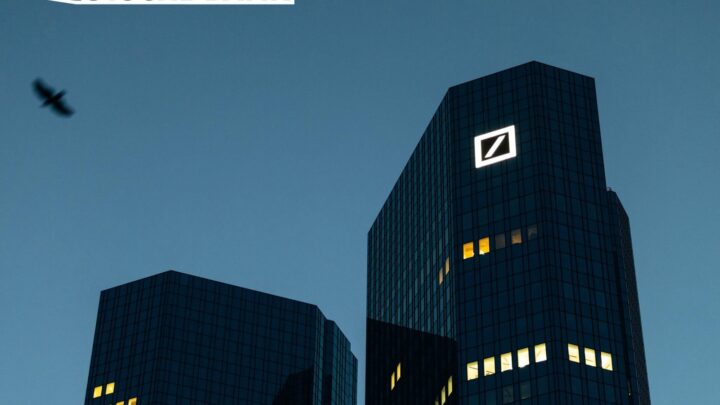
The more than 15 million internal files. Emails from senior executives. Secret risk assessments. Suspicious transaction reports. Private information about billionaires, oligarchs, politicians and royalty. Records involving Donald Trump, Jeffrey Epstein and sanctioned businessmen, and previously undisclosed companies linked to authoritarian regimes, that together add up to the largest cache of internal documents ever leaked to journalists from within a bank reveal much deeper issues affecting ordinary people in African villages.
Inside Deutsche Bank leak was worked on by 200 journalists from about 50 global media outlets across 50 countries, and the internal messages now coming to light lay bare, in cold, sometimes callous language, how a major global bank repeatedly looked the other way while dirty money flowed through its accounts. That cash didn’t materialise out of thin air. It came from looted projects meant to lift poor farmers in Africa out of poverty, and the bank’s financial plumbing helped move the proceeds.
How Deutsche Bank toys with Ghana: COCOBOD and the cocoa sector
The sweat of farmers in rural areas was not safe. Within this investigation regarding how Ghana’s cocoa sector has been managed by international finance organisations, it was revealed that Ghana has been paying excessive prices on its COCOBOD pre-export loan for many years. Senior bankers at ICBC London and Barclays admitted that Ghana’s cocoa loan had minimal risk, given that the political risk from the country was very low.
However, the same communications show that bankers were pleased that they could gain over 2% on Libor from this scheme, which is significant given that this rate is only given in unstable and unpredictable markets.
Over three decades, gaining 1-2% over the correct price equates to $13-26 million more per year. In total, $400 million has been drained from this industry. For cocoa farmers in Ejisu, or rural Ghana, this means that even though they grow the world’s chocolate, they live in extreme poverty due to the abuse of the profit margins in the financing of this product.
Benin’s life-saving hospital
€350 million was to be invested in building an advanced national hospital in Benin. However, due to bureaucratic issues, this vital healthcare project has been held up. At the same time, Deutsche Bank made the loan extremely difficult to complete by requiring physical qualification documents from retired local directors. However, incredibly, bank lawyers wrote up a multi-million-euro loan agreement, without including legal clauses that would ensure that the money did not end up in countries with international terrorist ties or countries under sanctions. For families in Cotonou or rural Benin, this means advanced healthcare, security and fighting diseases in their communities have now become impossible. Another year of watching loved ones suffer has occurred because of bureaucratic processes in international finance.
Dauda’s Burkina Ecobank approval and regional risks
This lack of due diligence in banking operations continued in the Sahel. Internal documents reveal that final business decisions were made on the Ecobank Burkina Faso relationship despite significant anti-money laundering red flags. Verification of the identities of Directors was conducted using only one source, when two independent sources must be used. Key figures in Executive positions were marked as Politically Exposed Persons; however, Enhanced Due Diligence was completely avoided. During this due diligence, compliance raised a serious negative flag for Ecobank Mali, due to the instability in the region.
You can also read: Inside Deutsche Bank: Leak of 15 million files exposes secrets, scandals and double standards of global financial giant
However, due to the fact that it would not affect current transactions in compliance, compliance allowed commercial departments to ignore the warning. Further issues were caused in this due diligence as the bank opened its correspondent relationship with the bank based on site visit data from over six years prior. Security measures within this bank were very vulnerable in this high-risk terrorist zone. For communities in rural Burkina Faso and Mali, this means that banks based in the area have approved risky relationships using inaccurate data and skipped procedures, meaning instability in the region may be vulnerable to illicit financial flows.
Bad guy vs good guy: Libya and Sudan sanctions overrides
Within dealings with high-risk entities from North and East Africa (Sudan and Libya), compliance officers evaded detection. When a ‘Hotscan’ system (an automated system to detect risks) highlighted that an entity linked to Sudan and Libya posed a sanction risk (‘bad guy’), rather than investigate, senior sanctions officers manipulated the system. They altered the risk status for the entity manually to be marked as a ‘Good Guy’ (GG). By doing this, alerts from automated systems were disabled entirely. High-risk trades and financial flows with sanctioned countries were therefore allowed through the bank. For people across the continent, this means that systems put in place to avoid illicit money and dangerous networks entering the global financial system are turned off by compliance officers, effectively making it possible for unregulated shadow actors to access local economies.
Togo’s Gnassingbé, Bolloré, and the €220 million loan
Sovereign money has been drained in this region. In August 2019, the Anti-Bribery and Corruption department at Deutsche Bank approved a loan of €220 million to the government of Togo in order to buy back domestic debt. However, internal documentation reveals that the Togolese government (Minister of Economy and Finance – Sani Yaya) was marked as highly risky due to extremely high corruption data, and President Faure Gnassingbé is currently under criminal investigation in France in relation to billionaire Vincent Bolloré. Despite allegations of corruption involving high-level politicians in this deal, quick approvals were requested. Standard legal terms and negative news monitoring were added, but no enhanced due diligence. Neither independent monitoring nor special monitoring was implemented. Essentially, allegations of bribery against the president were ignored in order to allow the transaction go ahead. Money intended to be given to rural households from state programmes or international loans has been intercepted.
You can follow his case: Nigerian court detains journalist Daniel Ojukwu on cybercrime charges
In order for money to reach an account in a bank, it must go through a correspondent banking system. Therefore, in order for this money to arrive, it must go through a bank which asks few questions. Deutsche Bank was one of such banks. Within the leaked information, it can be seen that when compliance officers raise concerns, they are often dismissed.
Charging clients when it shouldn’t
In Nigeria, internal communication revealed that Deutsche Bank admitted to charging Nigerian Banks for services they had not agreed to. Local staff also admitted that they did not have the capabilities to refund clients who had wrongly been charged. In Togo, compliance checks for Ecobank Togo were passed using documentation over six months old, using only an informal email from relationship managers stating there were no ‘material changes’.
For small-scale farmers in Burkina Faso, students in Benin, traders affected by the missed screening of Libya and Sudan sanctions, cocoa farmers in Ghana, or villagers in Togo, these statements do not represent corporate communications. These sentences mean that public services have not been delivered, hospitals have been delayed and stability in economies remains blocked.
The trickle-down is a flood
This is how the damage reaches the ground. A health centre in rural Ghana cannot be built as money has been redirected. Desks in schools in Nigeria are missing as an associate of a state governor required a shell company in Cyprus. Young mothers in Malawi have further distances to walk to collect water as the contractor for the borehole was never paid, as the money was ‘elsewhere’. The ‘elsewhere’ is often in a bank that knew. €200 billion was passed through Danske Bank in Estonia, much of it coming from Russia and former Soviet states.
Deutsche Bank was fined for failing to report suspicious transactions promptly. The same correspondent banking connections exist between African banks and African elites. Banks are too large to fail, and therefore too large to care.
Poor people are not clients. They are victims of the broken system. Their future is stolen to pay for fees.
Why this leak is different
Although we have heard of many scandals, naming billionaires, and showing extravagant yachts, they usually end with a fine from the bank’s petty cash. Since 2000, Deutsche Bank has paid over €20 billion in fines. However, nothing has changed.
This leak is significant as it shows decision-making processes. It shows when compliance officers have had concerns but have been overruled. It shows when software alerts have been manually changed due to the potential profitability of the client.
The leak now shows how the systems within the bank have failed, and that people knew what was going on. This leak provides evidence for journalists, regulators and people in Africa. It is evidence, not just allegations.
Whilst people in rural areas across Africa, and in Benin, Burkina Faso, Togo, Nigeria, Sudan, Libya and Ghana will likely never see any of these millions, if this leak results in even one correspondent bank ceasing to facilitate exploitative deals with corrupt elites in sovereign countries, or if one European regulator questions more thoroughly where money is coming from in Tripoli, Khartoum, Ouagadougou, Cotonou, Lomé, Lagos and Accra, then this leak has had an effect that previous scandals have not as yet.