To strengthen electoral credibility and reduce heightened tension during elections, journalists and civil society organisations (CSOs) have been trained to identify, analyse and report hate speech, fake news and disinformation.
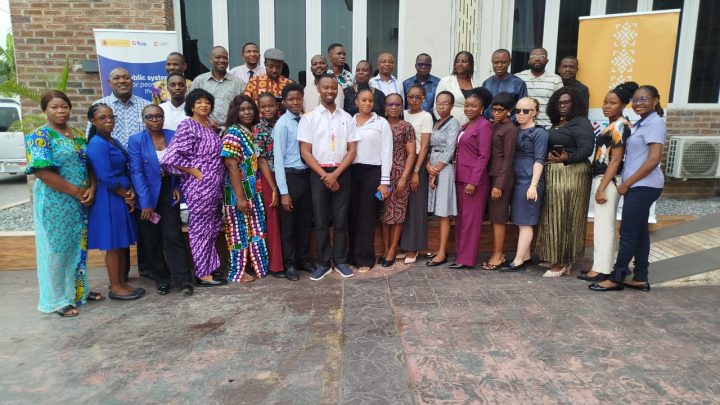
The three-day training, organised by Fundación para la Internacionalización de las Administraciones Publicas (FIAP) under the European Union support to ECOWAS Peace, Security and Governance (ESPG) Project, was held in Uyo from February 23rd through 25th.
The project implemented in partnership with Deutsche Gesellschaft für Internationale Zusammenarbeit (GIZ), and funded by the European Union and German Federal Ministry for Economic Cooperation and Development (BMZ), had journalists and CSOs from Bayelsa, Delta, Edo, Akwa Ibom, Rivers And Cross River states in attendance.
Speaking at the training, the FIAP/ESPG Coordinator, Maria Belén Sanchez, explained that the project is part of the organisation’s vision to promote peace, democratic governance and institutional resilience across the ECOWAS states.
According to Sanchez, the training also aims to equip journalists and CSOs with the knowledge and tools to “detect and counter fake news, disinformation and hate speeches linked to elections,” urging participants to prioritise accuracy, sensitive and responsible reporting online.
You can also read: Inside UD Farms’ Palm Oil Revolution in Akwa Ibom State
While noting that election cycles often witness an upsurge in manipulated content, misinformed narratives and coordinated disinformation that trigger tension and instability, the FIAP/ESPG Coordinator noted that journalists and CSOs play a major part in addressing these false narratives.
She, however, urged the participants to use the knowledge gained to help address hate speeches and false stories circulated on social media, particularly during the election season.
Clarifying the difference between the three types of information disorder, Centre for Journalism Innovation and Development (CJID) Manager, Lois Ugbede, listed misinformation, malinformation and disinformation as types of information disorder.
She explained that all three types are forms of information disorder concocted by people with the intention to mislead, noting that most of this false content is either edited or doctored to inflame public sentiment or to discredit people, particularly during elections.
Taking participants through the practical session, Ugbede listed various verification tools, such as Forensically, InVID, Reverse Image Search, and DeepWare, among others, that can be used to analyse and detect false stories.
Explaining how false news manufacturers create multiple accounts to amplify false narratives, CJID’s Assistant Editor, Silas Jonathan, explained how these duplicated accounts create viral content that is misleading and emotionally charged to provoke outrage and public unrest.
While highlighting the media’s influence on the public, Jonathan urged journalists to prioritise accuracy over speed, explaining that media influence can either stabilise or destabilise the election process and public perception.
You can also read: Why Akwa Ibom Must Not Host Prophet David Owuor
Dataphyte Foundation, Head of Policy Research and Communications, Adijat Kareem, addressed digital security and the legal implications of sharing false stories.
Kareem warned that disinformation can cross into criminal liability when it incites violence or public disorder, particularly during elections. She urged journalists to strengthen internal data protection systems, secure organisational websites and adopt conflict-sensitive reporting standards.
Meanwhile, several attendees described the training as insightful, pledging to integrate the knowledge gained into their various newsrooms. The training ended with the launch of the #CheckBeforeYouPost campaign, an awareness campaign aimed at encouraging people to verify information before sharing it online.